20 Great Tips For Picking Termite Extermination Services In Jakarta
Javanese Preserves Traditional StructuresEvery heritage building tells two stories in Jakarta. The first is inscribed in carved teak and colonial-era joinery--craftsmanship that has survived earthquakes, regime changes, and a century of tropical rainfall. The second story is told in mud tubes and a frass. Also, it includes the hollow echo left by an old timber which was relegated to veneer by termites. Javanese-wood preservation in historical structures does not involve the work of a museum. It is more of the use of forensic techniques. The materials themselves are often less durable than those that are romanticized or fabricated ones, and the most authentic replacement timber could be the most appealing to termites living in subterranean areas. To ensure termite protection, the heritage contracts should include species identification, verification of heartwood, and preservation methods that protect the colonial construction stories weaved into the grain.
1. Teak that is marketed as Heritage Teak is distinct from the teak that is sold now
Javanese teak, which is aged and harvested between 40 and 60 years old, is a source of extractive oils as well as silica. These ingredients prevent termites feeding. Teak from plantation harvests at 15 to twenty years is devoid of both. The majority of heritage buildings that fail today don't fail because of decayed timber; they typically fail because 20th century repairs were done with unmature teak, which termites see as food. To ensure that the replacement wood isn't a danger to termites, it's important for pest control professionals to test it before installation.
2. Heartwood In contrast to Sapwood The Invisible Durability Gap
A single piece of timber can be able to sustain two levels of wear. Mahoni sapwood, on contrary, is very susceptible to termites. Nangka sapwood is classified as Class V (the lowest rating). The heartwood of Nangka is classified as Class II. If restoration contractors for heritage projects specify wood types without specifying heartwood manufacturing only, they install termite-susceptible materials into structures that have survived many years because of their old-growth resilient. Anti-termite businesses should request cores before approving any timber for restoration.
3. Bamboo Preservation is a reality, but it Requires Immersion
Bamboo that is not treated, and not bamboo itself, is the culprit. Tobacco-stalk vinegar, which is sprayed by the cold-soaking process for 24 hours, followed by soil drenching, can reduce termite damage to the bamboo by 30 percent over 18 months. Bamboo structures of the past are possible to preserve, however surface brushing is insufficient. In addition, an infrastructure for immersion will be needed.
4. Javanese wood used in repairs from the Colonial period is not authentic
Dutch plague officers had to rebuild 1.6 million Javanese house between 1911 and 1941 using criteria based more on epidemiological criteria than cultural continuity. A lot of the structures that are often mistakenly thought to be Javanese vernacular were actually built by colonial health professionals. Anti-termite inspections of heritage buildings should distinguish between Dutch-mandated substitutes and precolonial wood joinery. If they are treated as one and the same is a misrepresentation of preservation philosophies as well as termite risk assessments.
5. Soursop Leaf Extract Works at 25% Concentration
The weight loss caused by termites is reduced to less than five percent through cold-soaking durian and coconut timbers in a solution comprising 25% soursop extract. This is an commercially acceptable classification for resistance. This is not folk medicine; it is concentration-dependent, replicable, and requires no synthetic chemistry. Jakarta exterminators dealing with heritage clients need to partner up with facilities capable immersion treatment, and verify the concentration of extracts on treatment documentation.
6. SNI Class II Is Not "Termite Proof"
Even though Class II Indonesian National Standard wood is categorized as "resistant" but it is subject to a weight loss of six to ten percent when tested against Coptotermes curvevignathus. Heritage preservation agreements that state"Class II or greater" with no additional intervention allow for measurable consumption. If the wood is indestructible, it should be protected by physical barriers or baits that are not repellent.
7. Agathis and Durian Timber and Durian Timber Liabilities
Agathisdammara is a popular material used for the colonial period for Javanese joinery, furniture and interiors. Central Java's historic structures are abundant with Durio Zybethinus. In standardized tests, both species score Class V -- very weak resistance. Inspectors of heritage buildings must identify these species and have them followed with utmost care. A carved-out Agathis doorframe is not a conservation asset, but a termite feed station dressed in historic dress.
8. The moisture content determines the detectability
The termites aren't able to detect wood that is less than 12 to 15 percent moist, no matter the species or the durability class. Heritage foundations are usually waterlogged and leaky. If termite treatments treat heritage wood without first looking at the drainage of the roof and downspouts and capillary water leaking through the masonry, they are applying costly treatments for wood termites who have already identified.
9. The 1911 Archive is available and searchable
University of Cambridge archives and Dutch colonial collections have around 300 images of Javanese building construction from 1911 until 1930. They showcase the authentic materials used, historic repairs and joinery methods that are specific to the area. These aren't just academic treasures, but forensic resources. Heritage exterminators who look through archives of photographs can discern original fabric from later substitutes, and adjust the risk assessment.
10. Preservation through Treatment Not Replacement
The Dutch colonial model shows how material substitution on a continental level can produce buildings of doubtful authenticity as well as termite resistance. Plantation wood can't replace the original timber in a manner that improves heritage preservation. Preservation by treatment is the most ethical and economically viable option. This includes immersion in natural extracts, and targeted baiting of irreplaceable fabrics and physical barriers retrofits that do not require digging out historic foundations. Anti-termite services that position themselves as preservation partners, instead of replacement contractors, earn the trust of owners as well as specifications from architects.
Conclusion
Javanese Wood Preservation isn't some niche specialist; it is a termite control method which has been in use for decades, well before the invention of pesticides made from synthetic chemicals. The 25 percent soursop extract threshold, 18-month bamboo-vinegar protocol, and heartwood-verification requirement aren't substitutes for professional termite control. Instead, they are standard professional methods for extermination of termites. Jakarta anti-termite service providers who are seeking heritage contracts are required to invest in an immersion infrastructure and purchase the core equipment for sampling, and train inspectors on how to distinguish colonial plague-related housing from vernacular pre-colonial construction. The wood is indestructible. It is not that the knowledge has been lost however it has not been implemented. Conservators and homeowners are willing to spend more money for services that incorporate this capability. There exists an industry. It is a matter of which exterminators will be able to meet it. Read the recommended jasa anti rayap for site recommendations including rayap pekerja, jasa basmi rayap, pembasmi hama, pest control jakarta selatan, jasa rayap, cara membasmi rayap kayu, rayap adalah, cara membasmi rayap di lemari kayu, rumah rayap, basmi rayap and more.
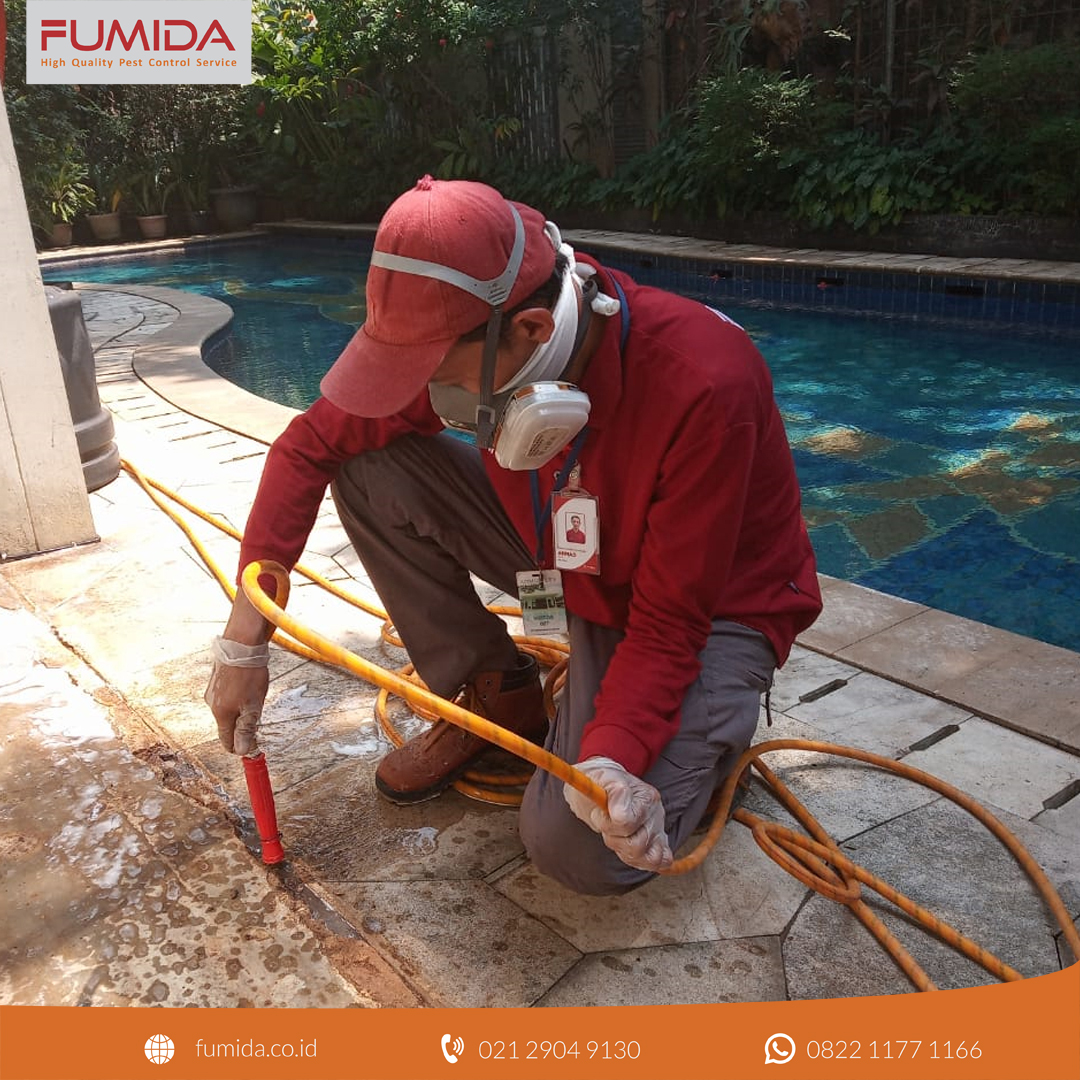
Alternatives To Fumigation In Indonesian Villas And Jakarta
Indonesian villa owners are conditioned to think that tent fumigation is the only option when ants from subterranean penetrate roofs, walls, and embedded wood. This notion is propagated by fumigation companies and sustained by homeowner anxiety. The tent falls and the neighbors complain, the family evacuates for 3 days and then the colony inside the walls dies. In 18 months, the community in your garden will rebuild the tunnels to eat, unaffected by gas. Fumigation can sterilize a building but has no effect on the reservoir of landscape. Offering viable alternatives to Jakarta anti-termite service that serves the villa market is not charitable, but rather a way of positioning themselves as a viable competitor. Customers with huge estates, such as the ones located in Pondok Indah that have eight bedrooms, or a holiday complex in Puncak, do not like tenting. They would like to eradicate the colony, without the glitz of evacuation or the danger of returning.
1. Baiting kills the colony; Fumigation kills termites in
The tent's fumiganation produces an explosive gas concentration to every void within the building envelope. Each termite that enters the structure is killed. The colony beneath the driveway, in the garden and below neighbouring properties do not end up dying. Traphallaxis delivers poison into the colony nucleus through baiting. The colony is killed. The structure becomes reinfestation-resistant because the source population is eliminated. If homeowners are aware of what the distinction is, they do not require fumigation.
2. Heating Treatments can reach where Gases Cannot
The whole-structure heat treatment boosts the internal temperature of wood to 50 degrees Celsius and then maintains it for an hour. It kills all life stages including eggs, doesn't require tenting, and does not leave any chemical residual. It is suitable for Indonesian villas with intricate carvings, heritage wood, as well as exposed beam construction. The equipment is available. Contractors are there. The homeowner should be aware of the alternatives.
3. Electro-Gun Technology For Localized Infection
High-frequency microwave devices emit radiation which triggers water molecules within wood, creating lethal heat in specific regions of infestation, without impacting the other materials. Electro-gun treatments can be used by villa owners who find active termites on a single door frame, or roof truss. The termite infestation is eradicated within a single treatment without the requirement to evacuate the house. Jakarta exterminators are not importing this method of treatment because it's not experimental.
4. Wood Injection Systems Preserve Architectural Fabric
Capillary action creates liquid borate formulations that are instilled under high pressure into drillholes, to migrate through the wood and render the entire wood a toxic material for termites. The hole for drilling is less than the nail holes that are already in place. The carving remains intact. The door frame has not been removed. Indonesian villa owner often reject this treatment in the event that exterminators offer it following they suggest replacement. When offered before replacement is accepted.
5. Baiting above-ground for hidden cavern colonies
Tent fumigation was the preferred method when Coptotermesgestroi established an aerial nest inside the walls or in roof spaces. Bait stations that are above ground and secured to active mud tubes that emerge from the corners of the ceiling, or baseboards deliver toxicant directly the nest's population. The colony consumes its own construction workers when they pass through the tube that was baited. No tent. No evacuation. Six to eight weeks.
6. Nitrogen Freezing for Small-Scale Heritage Components
Infested wood is swiftly frozen with liquid nitrogen that is circulated inside sealed chambers. After the freeze cycle the wood is then thawed that is followed by another. Cryogenic baiting does not constitute an chemical treatment. If you've got a tiny population of ants on antique or museum-quality Javanese carvings The nitrogen freezing method will protect the patina. The injection and heat treatment could darken the patina.
7. Physical Barrier Retrofits Help Prevent Re-infestation
The villa which fumigates each year, with no physical barriers, rents temporary sterilization. The stainless steel mesh or polymer sheet, retrofitted by excavation of the perimeter blocks subterranean termites from returning to the structure following the colony has been eliminated. When combined with a permanent exclusion system, fumigation alternatives are very persuasive. Make a case for the combination by baiting to eliminate the colony, and then constructing the barrier in order to ensure that it is the last colony that will ever be able to occupy the structure.
8. Carbon Dioxide Purging for Enclosed Spaces
Carbon dioxide pressurized into the attic space that is sealed or crawl spaces displaces oxygen to lethal concentration for termites confined within those space. It is not required to cover the entire structure and only a small portion of it. CO2 is a gas that dissipates rapidly, doesn't leave any traces, and poses minimal risk to the occupants when re-entry procedures are adhered to. The full-scale fumigation process is not required for Indonesian homes where termite infestations are restricted to the roof.
9. Disclosure of Baiting Times Upstream
The termites can be killed by fumigation within 72 hours. Baiting eliminates colonies within 6 to 8 weeks. Owners of villas used to tent will not be able to take baiting seriously if the timing is announced after mobilization. Timelines are accepted when they are disclosed before the contract is executed. Jakarta anti-termite solutions that hide baiting duration until after the proposal is delivered have their own close rate difficulties.
10. The Reservoir Colony Must Be Identified and Targeted
Every villa in Jakarta sits within foraging range of at least one parent colony in adjacent green space, cemetery, or an undeveloped land. Fumigation ignores this colony. Injection heat treatment, baiting or injection will ignore this colony, unless deployed specifically outside the perimeter of the structure. Comprehensive fumigation alternatives include landscape baiting grids aimed at the external colony that will in the event of a recurrence, the villa will be infested 18 months. Exterminators that treat the structure but not the reservoir will provide temporary relief, but not long-lasting exclusion.
Indonesian villa owners don't want to move out of their houses. They aren't a fan of tenting on their lawns that are perfectly manicured. They don't want neighbors to inquire whether the property is infested. They really want to destroy the colony and have the certainty that the colony will not be back. Fumigation achieves the first goal with a high degree of reliability, and the second in no way. When utilized as integrated protocols, instead of other options like baiting, heat treatments and microwave technology nitrogen injection into wood, CO2 purging and retrofits to physical barriers will accomplish both objectives. Jakarta anti-termite solutions that present themselves as fumigation alternatives suppliers--carrying different elimination methods, educating technicians on species-specific protocols selection and evaluating results of reinfestation prevention--will be able to be able to capture the best villa segment currently held captive by tenting contractors. The investment in equipment is significant. The training investments are ongoing. Demand is already extremely high. Villa owners are searching for "fumigation alternative Jakarta" every day. Which exterminators, with evidence-based alternatives and credible credentials, will show up in the search results What will they choose to use? And which are likely to default to tents? Check out the top rated anti rayap for website info including pengendalian hama, kayu tahan rayap, kayu tahan rayap, penyebab rayap di lemari, pest control jakarta selatan, pembasmi rayap kayu, kayu tahan rayap, rayap pekerja, cara basmi rayap, jasa pembasmi rayap and more.
